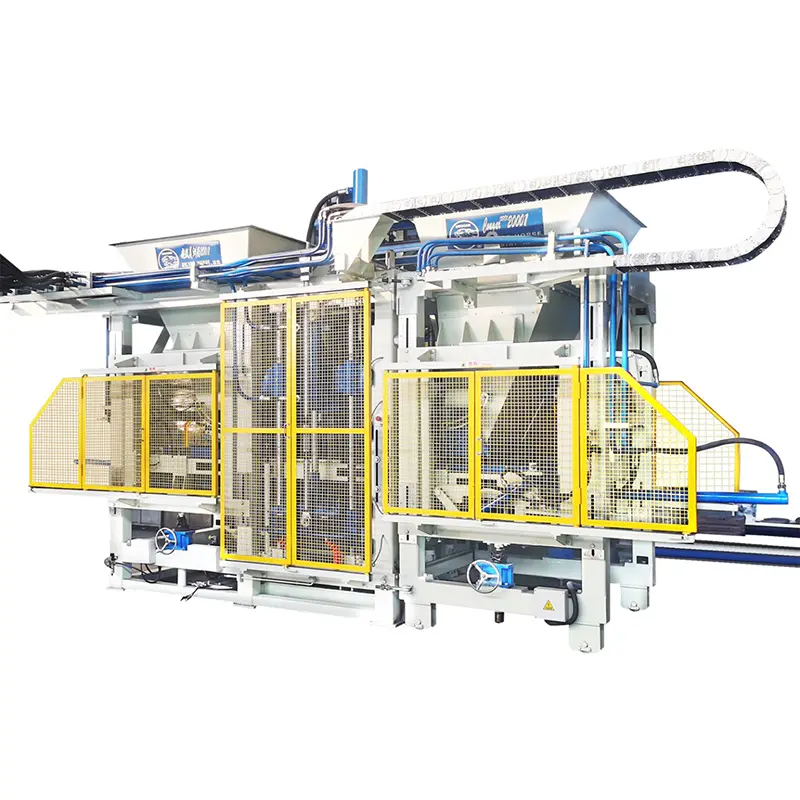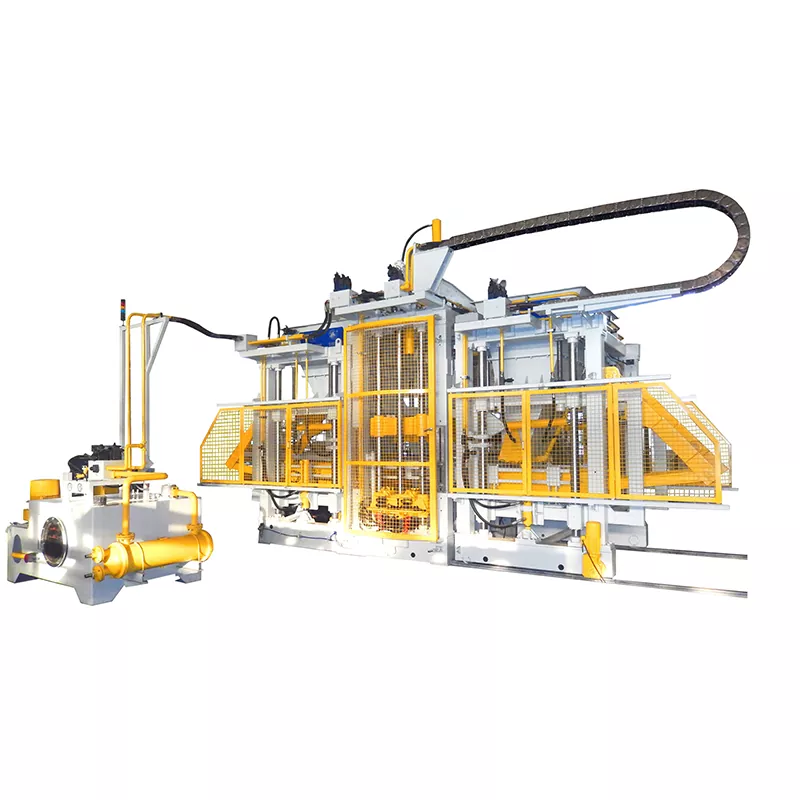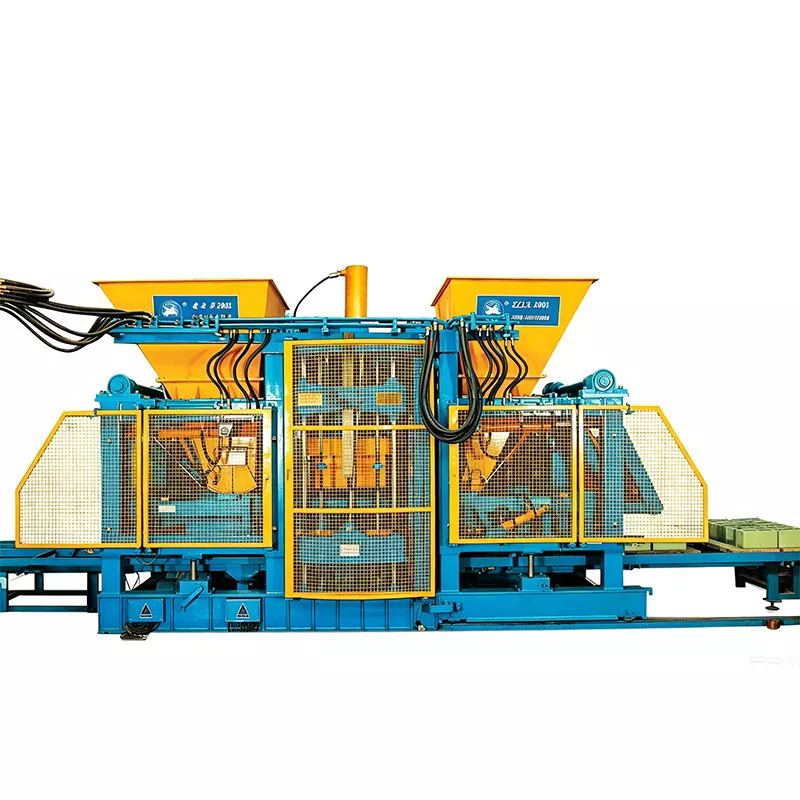

Silver Horse presents the QFT15-18 Block Making Machine as a high-capacity solution for manufacturers seeking automated concrete block production, consistent molding quality, and efficient large-scale output. Designed around intelligent HMI+PLC control and advanced servo vibration technology, this equipment supports the production of hollow blocks, paving stones, solid bricks, curbstones, slope-protection bricks, lawn blocks, and other concrete products.
The QFT15-18 is engineered for industrial block factories that require higher production capacity without relying heavily on manual operation. Its fully automated production concept connects batching, mixing, molding, conveying, curing, pallet handling, and palletizing into an integrated workflow. Depending on the product and raw material formulation, the machine can achieve outputs such as 8,600–10,000 paving stones per hour, 2,450–3,000 hollow blocks per hour, and 15,000–18,900 solid bricks per hour. Its four-axis chip servo vibration system, approximately 30g average excitation acceleration, 0–65 Hz excitation frequency, and approximately 135 kW main-machine installed power provide a technical foundation for high-throughput concrete product manufacturing.
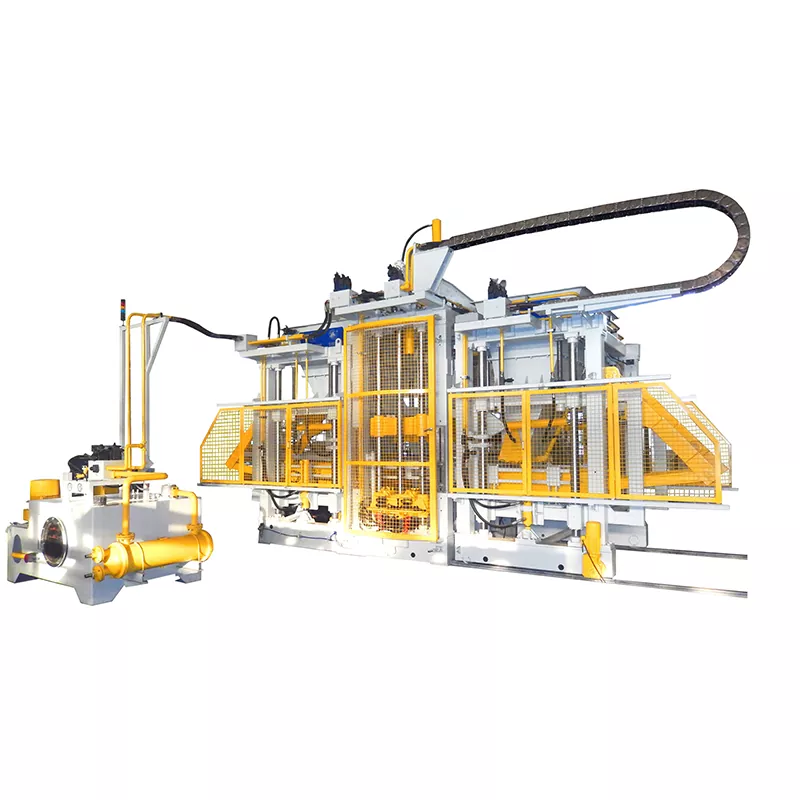
Table of Contents
- What Is the QFT15-18 Block Making Machine?
- How Does Automation Improve Production Efficiency?
- Why Is Servo Vibration Important for Concrete Block Quality?
- What Products Can the Machine Produce?
- What Are the Key Technical Parameters?
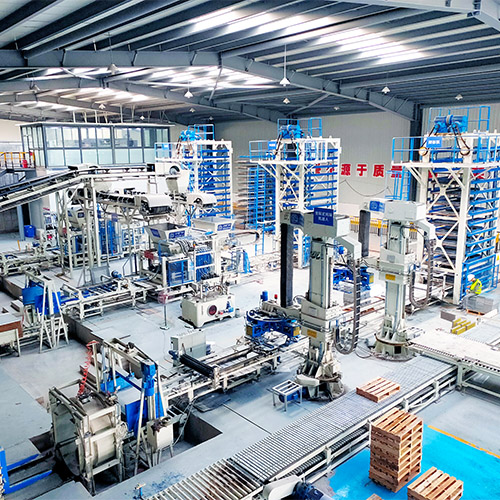
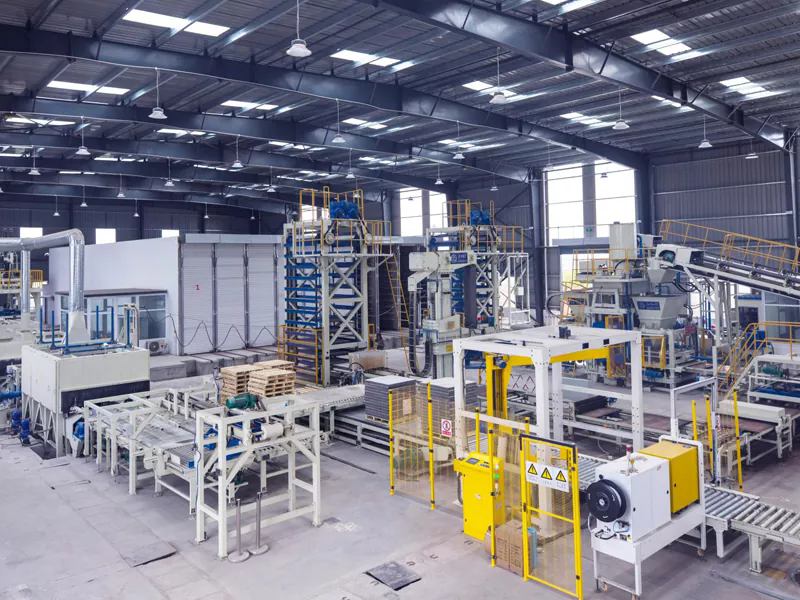
- How Does It Fit Into a Fully Automatic Production Line?
- What Should Buyers Consider Before Purchasing?
- Frequently Asked Questions
- Conclusion
What Is the QFT15-18 Block Making Machine?
The QFT15-18 is a high-capacity automatic concrete block production machine developed for larger-scale manufacturing operations. Unlike small block machines that depend on considerable manual intervention, this model is designed around an integrated automated workflow and an HMI+PLC intelligent digital control system.
The machine belongs to the Silver Horse block-making equipment series and was developed as a higher-capacity successor to the earlier QFT 9-16 model. Its production configuration is intended for factories that need repeatable molding cycles, centralized process control, and efficient material handling.
One of its important characteristics is its ability to accommodate different concrete products by changing the mold configuration. This makes the equipment useful for manufacturers serving construction, municipal infrastructure, landscaping, road paving, and slope-protection projects.
How Does Automation Improve Production Efficiency?
For a modern concrete-product factory, production efficiency is not determined only by the speed of the main machine. Material preparation, pallet movement, product transfer, curing, stacking, and operator intervention can all affect actual factory output.
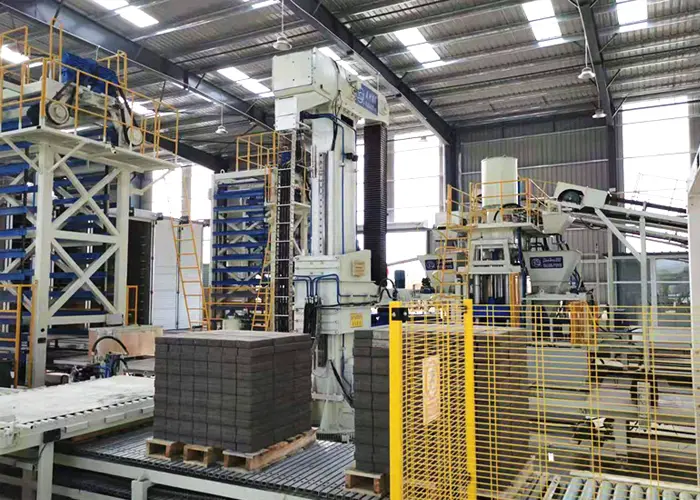
The QFT15-18 is designed to connect these stages into a coordinated production process. A fully automatic configuration can integrate raw-material batching and mixing with molding, wet-block conveying, pallet handling, curing, pallet storage, and robotic palletizing.
- Reduced manual intervention: Automated material handling and pallet movement reduce repetitive labor requirements.
- Consistent operation: PLC-based control helps standardize production parameters throughout repeated cycles.
- Higher throughput: Large molding capacity allows more products to be formed during each production cycle.
- Better workflow coordination: Conveyors, pallet systems, curing equipment, and palletizing equipment can work as a connected production system.
- Centralized monitoring: HMI and PLC controls provide operators with a more organized way to manage production.
For factories planning long-term production expansion, automation can also make the manufacturing process easier to standardize as output requirements increase.
Why Is Servo Vibration Important for Concrete Block Quality?
Vibration is a critical part of concrete product molding because the concrete mixture must be distributed and compacted effectively inside the mold. Inconsistent vibration can contribute to variations in density, surface appearance, and product geometry.
The QFT15-18 uses a four-axis chip servo vibration system developed with Silver Horse's patented technology. The published technical specifications indicate an excitation frequency of 0–65 Hz and an average excitation acceleration of approximately 30g.
The servo vibration configuration is intended to provide controlled and efficient material compaction. When the appropriate vibration parameters are matched with the concrete mix, mold design, and product requirements, the process can help improve uniformity and molding stability.
This is particularly important when manufacturing products with different dimensions or structural requirements. Rather than treating vibration as a fixed-speed mechanical operation, a computer-controlled frequency conversion system provides more flexibility in production parameter management.
What Products Can the Machine Produce?
One of the main advantages of a high-capacity block-making system is production versatility. With suitable molds and properly formulated raw materials, the QFT15-18 can manufacture multiple categories of concrete products.
| Product Type | Typical Size | Molding Quantity | Reference Output |
|---|---|---|---|
| Paving Stone | 198 × 98 × 60/80 mm | 60 pcs./pallet | 8,600–10,000 pcs./h |
| Color Curbstone | 500–800 × 120 × 350 mm | 2 pcs./pallet | 205–240 pcs./h |
| Slope-Protection Brick | 406 × 305 × 102 mm | 9 pcs./pallet | 1,300–1,620 pcs./h |
| Solid Brick | 240 × 115 × 53 mm | 84 pcs./pallet | 15,000–18,900 pcs./h |
| Hollow Block | 390 × 190 × 190 mm | 15 pcs./pallet | 2,450–3,000 pcs./h |
The equipment can also be configured for products such as interlocking blocks, lawn blocks, ecological permeable bricks, porous blocks, artificial stone, municipal bricks, and special construction products. Actual output varies according to product dimensions, raw materials, formulation, and required product grade.
What Are the Key Technical Parameters?
Understanding the technical configuration is essential when evaluating a block-making machine because output alone does not describe the complete production capability.
| Technical Item | QFT15-18 Reference Specification |
|---|---|
| Pallet Size | 1,400 × 1,200 mm |
| Main Machine Installed Power | Approximately 135 kW |
| Excitation Frequency | 0–65 Hz |
| Average Excitation Acceleration | Approximately 30g |
| Vibration System | Four-axis chip servo vibration system |
| Control System | HMI + PLC intelligent digital control |
| Production Mode | Fully automatic production configuration |
These specifications should be considered together with the factory's product mix and production plan. For example, the output of hollow blocks cannot be directly compared with the output of smaller paving stones because molding quantities, dimensions, cycle times, and material consumption differ.
How Does It Fit Into a Fully Automatic Production Line?
The main machine represents only one part of an industrial block production system. To achieve continuous production, auxiliary equipment must be coordinated around material preparation, molding, transportation, curing, and finished-product handling.
A typical automated configuration can include:
- Batching machine
- Color-material mixer
- Base-material mixer
- Screw conveyor and cement silo
- Cement scale
- Material belt conveyors
- Main block-forming machine
- Wet-block conveyor
- Pallet feeder and pallet elevator
- Curing kilns and curing conveyors
- Pallet lowering and storage equipment
- Coordinate-type palletizing robot
- PLC control room
- Packaging system
This integrated approach allows manufacturers to design production capacity around the complete factory workflow instead of evaluating the block-forming machine as an isolated piece of equipment. For large projects, a fully automatic block making production line can provide a more coordinated solution.
What Should Buyers Consider Before Purchasing?
Choosing industrial block-making equipment should begin with the intended products and required production capacity rather than simply selecting the machine with the largest nominal output.
- Define the product range: Determine whether the factory will mainly manufacture hollow blocks, solid bricks, pavers, curbstones, permeable bricks, or several product categories.
- Calculate realistic capacity: Consider molding cycle, curing capacity, working hours, product size, and planned utilization instead of relying only on maximum hourly output.
- Evaluate automation requirements: Decide how much of batching, conveying, pallet handling, curing, and palletizing should be automated.
- Check factory infrastructure: Confirm available electrical capacity, production space, raw-material storage, curing area, and finished-product handling space.
- Consider mold flexibility: If multiple products are planned, mold compatibility and changeover requirements should be included in the purchasing decision.
- Review technical support: Installation, commissioning, operator training, spare parts, and after-sales support can directly affect the startup process.
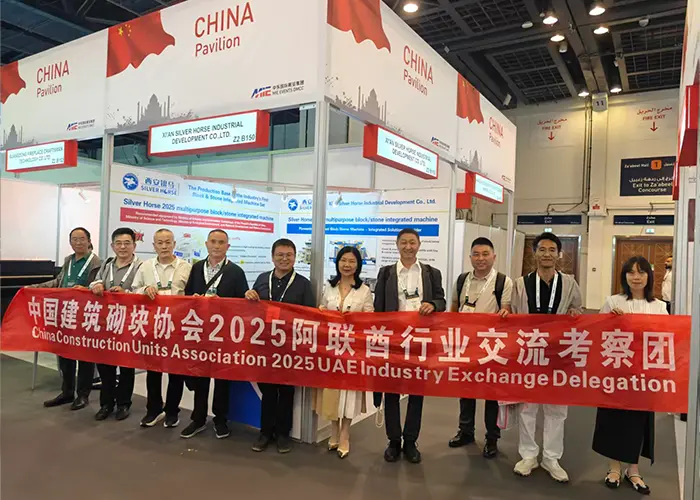
Silver Horse has developed and supplied block production solutions for international markets, with its company information reporting projects across multiple regions. The manufacturer also states that its equipment is designed to meet international export requirements and can be supplied with supporting equipment for complete production solutions.
Frequently Asked Questions
What types of blocks can the QFT15-18 produce?
The machine can produce hollow blocks, solid bricks, paving stones, curbstones, slope-protection bricks, lawn blocks, ecological permeable bricks, porous blocks, and other concrete products when matched with suitable molds and production formulations.
What is the output of the QFT15-18 for hollow blocks?
For a 390 × 190 × 190 mm hollow block, the published specification indicates a molding quantity of 15 pieces per pallet, a cycle time of approximately 18–22 seconds, and a reference output of about 2,450–3,000 pieces per hour, equivalent to approximately 34–42 m³ per hour.
Is the QFT15-18 suitable for automated factories?
Yes. The machine is designed for fully automated production configurations and can be integrated with batching, mixing, conveying, curing, pallet handling, palletizing, and PLC control systems.
What is the main-machine installed power?
The published technical parameters specify approximately 135 kW for the main machine. The total electrical requirement of a complete production line will be higher because auxiliary equipment must also be included.
What factors affect the actual production cycle?
Product dimensions, raw-material characteristics, concrete formulation, product strength or grade requirements, mold configuration, and operating conditions can all influence the molding cycle and final output.
Can the equipment be used for paving stone production?
Yes. The published data lists a 198 × 98 × 60/80 mm paving stone configuration with 60 pieces per pallet, a 20–25 second cycle time, and an indicated output of approximately 8,600–10,000 pieces per hour.
Conclusion
The QFT15-18 combines high-capacity molding, automated production control, servo vibration technology, and flexible product applications into a production platform designed for large-scale concrete product manufacturing. Its technical configuration makes it particularly relevant to factories producing pavers, hollow blocks, solid bricks, curbstones, slope-protection products, and other concrete construction materials. If you are planning a new block production plant, upgrading an existing facility, or evaluating equipment capacity for a specific product portfolio, learn more about the QFT15-18 Block Making Machine and discuss your required output, molds, raw materials, and automation configuration with Silver Horse. For a tailored production proposal, equipment configuration, and quotation, contact us today and let our technical team help you plan a practical block manufacturing solution.