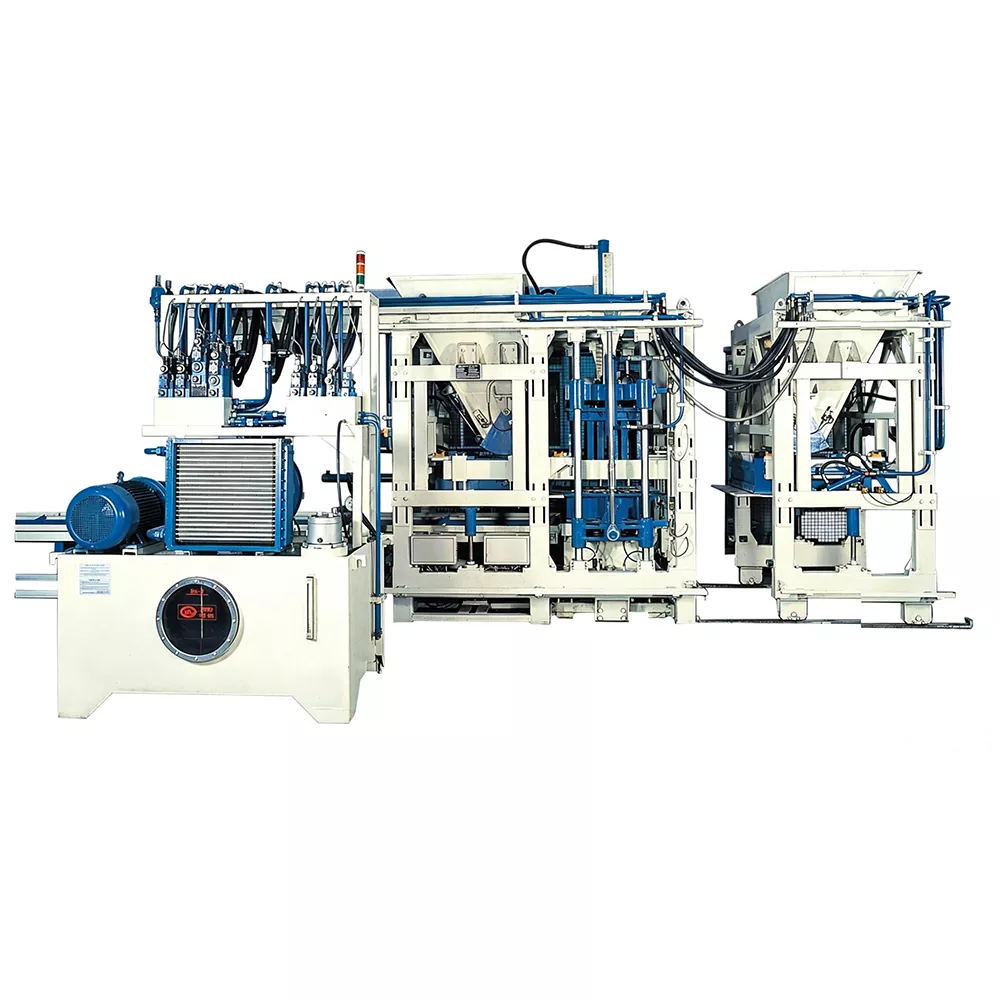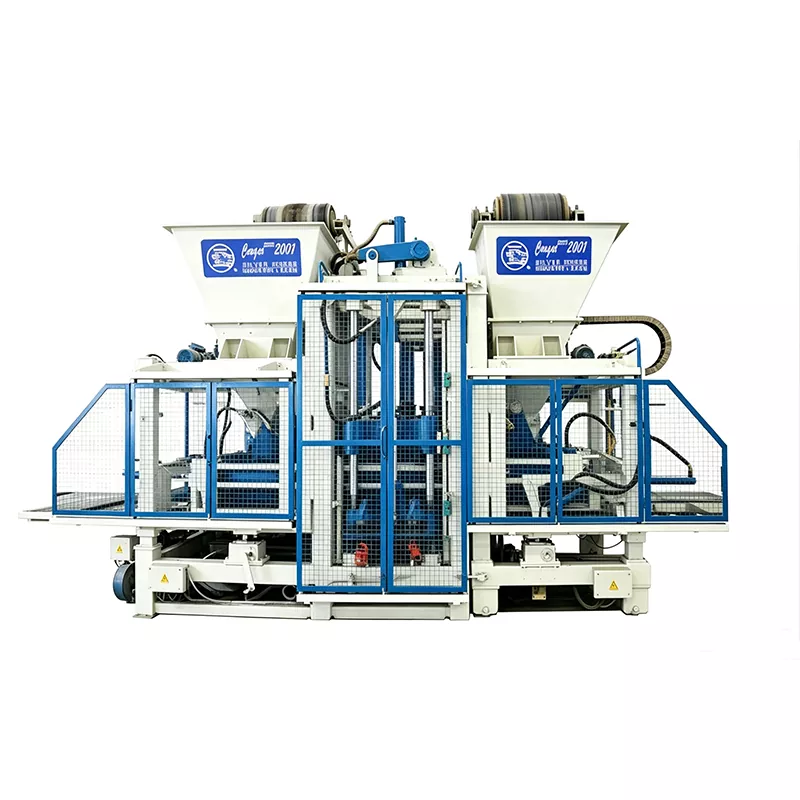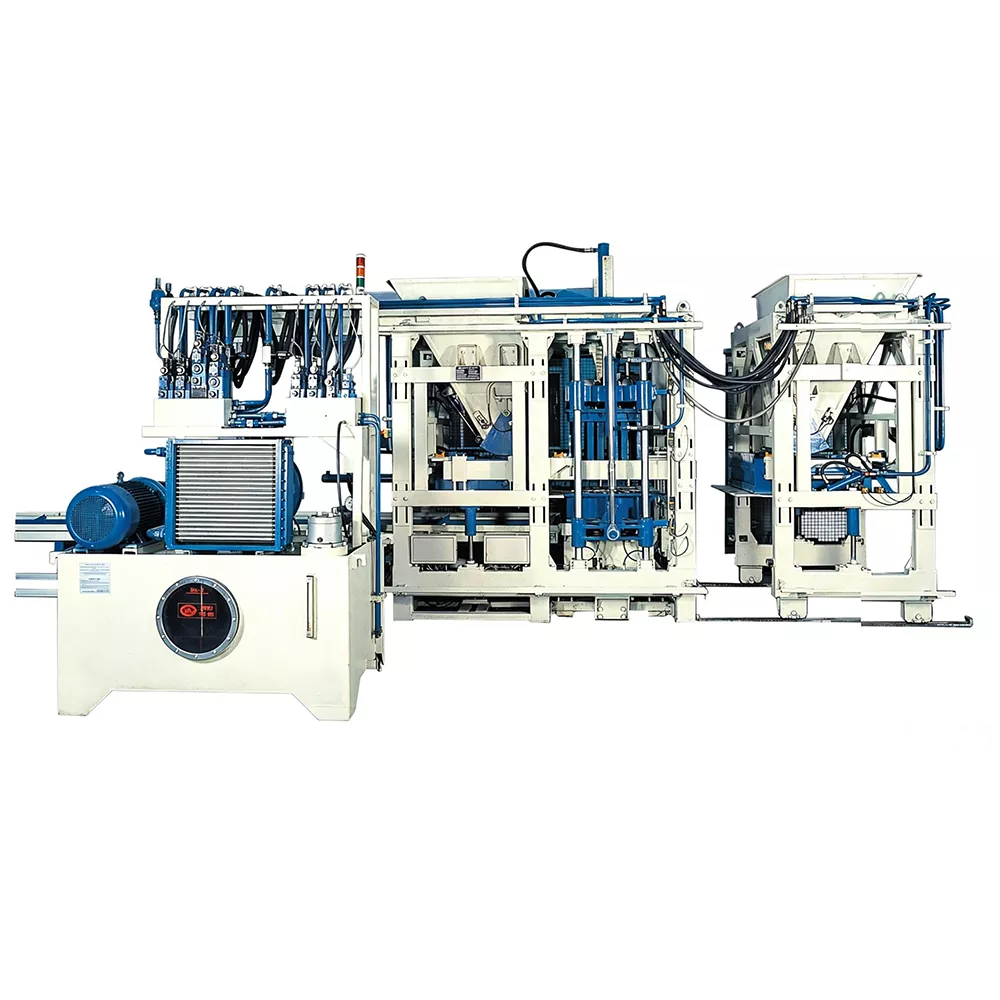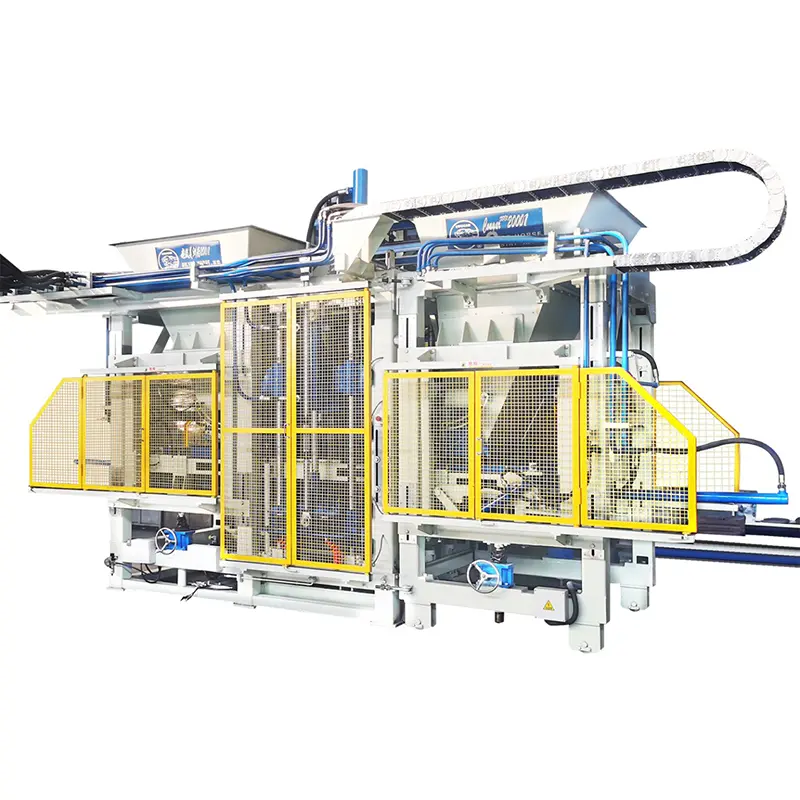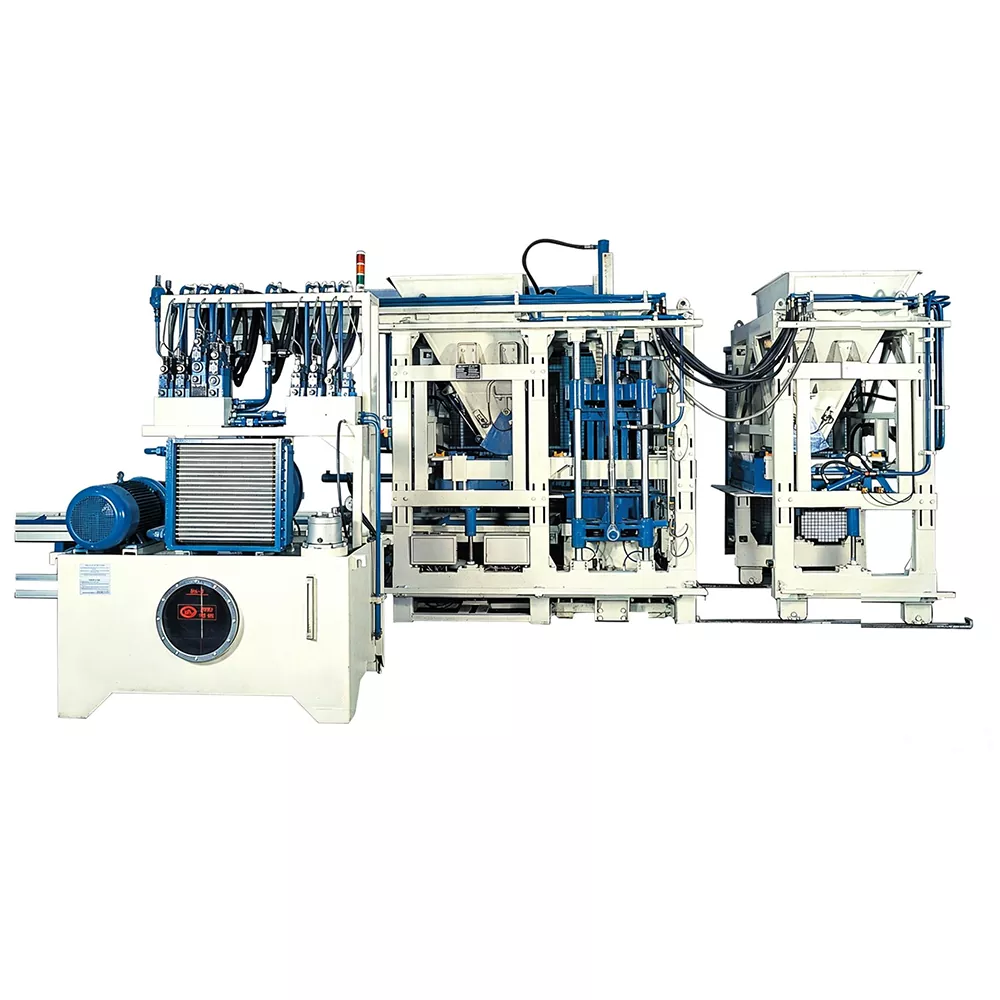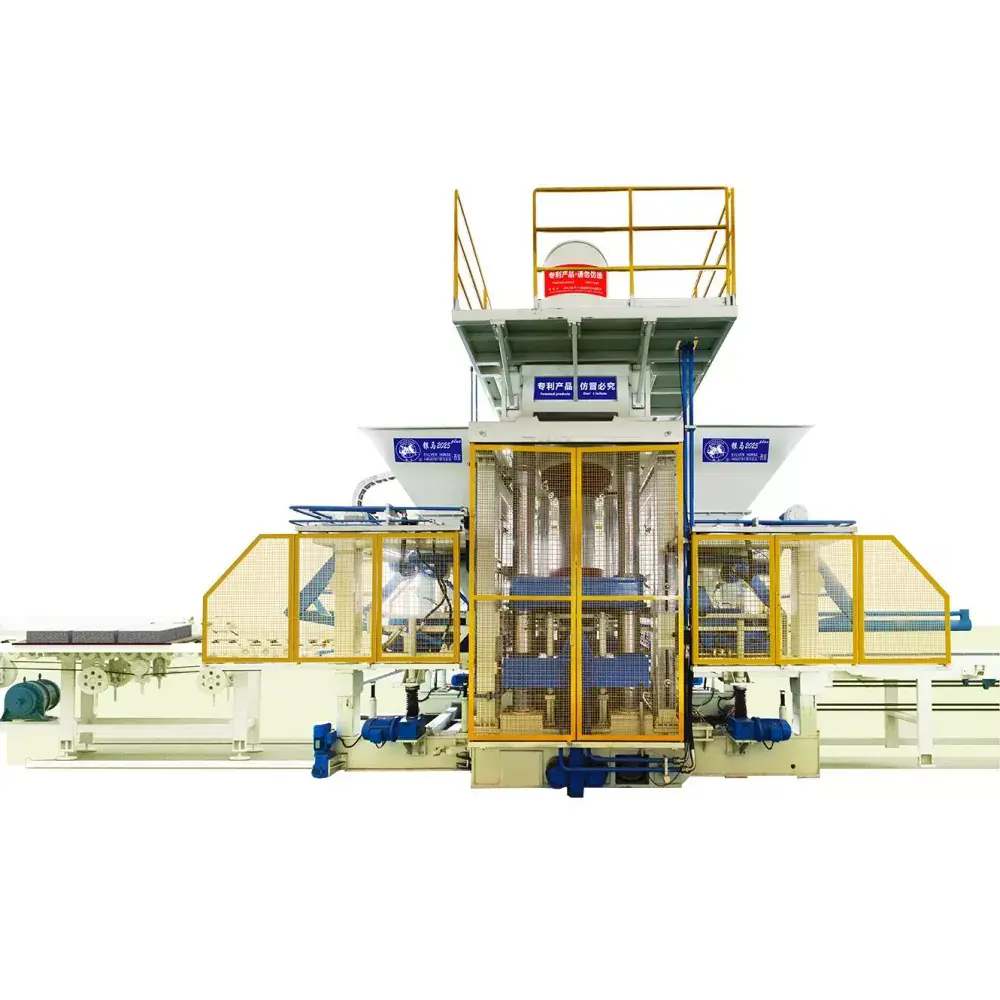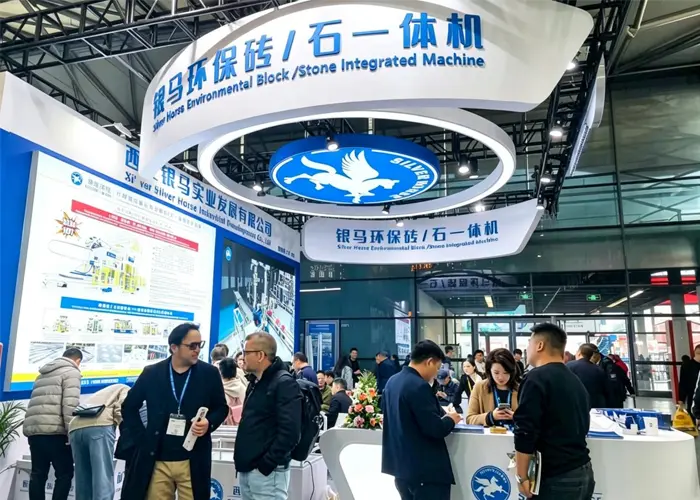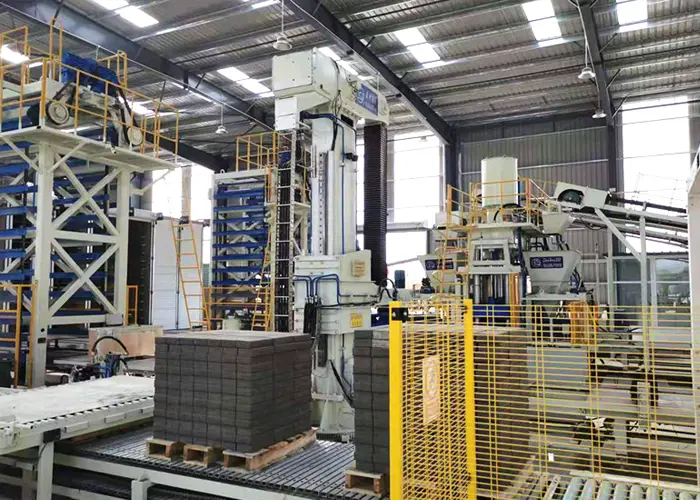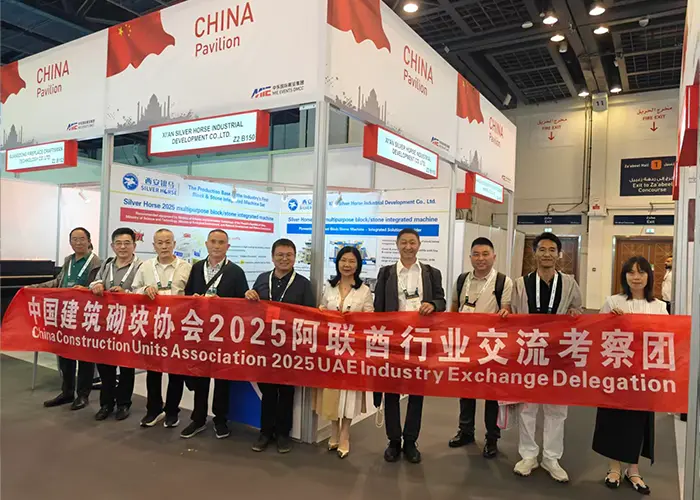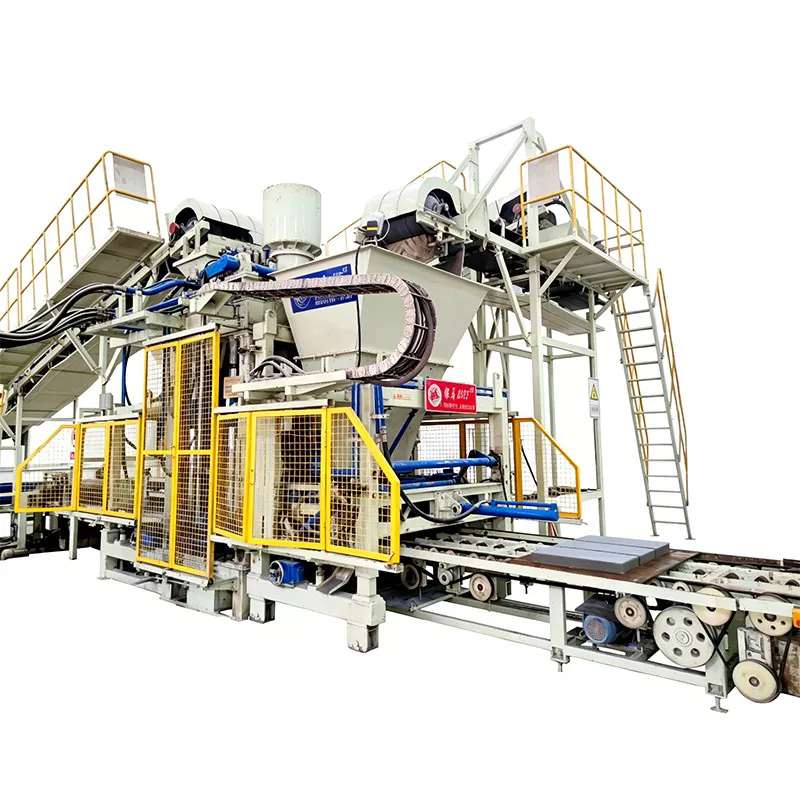

For manufacturers seeking greater product flexibility and efficient plant utilization, Silver Horse's Integrated Block and Stone Production Machine combines block and artificial stone production in one system. Its 2025 model uses pressure, adjustable vibration, extrusion, and fusion technologies to support diverse construction-material applications while reducing the need for separate production equipment.
An integrated production system can help concrete-product manufacturers serve multiple market segments without operating completely separate manufacturing lines. The Silver Horse 2025 system is designed to produce solid bricks, paving stones, hollow blocks, PC artificial stones, and other molded products through interchangeable molds. With approximately 600 tons of static pressure, adjustable vibration, servo-driven operation, and a production line power requirement of about 540 kW, the equipment is designed for high-volume industrial manufacturing. Depending on product type and configuration, listed output reaches up to 14,000 solid bricks per hour.
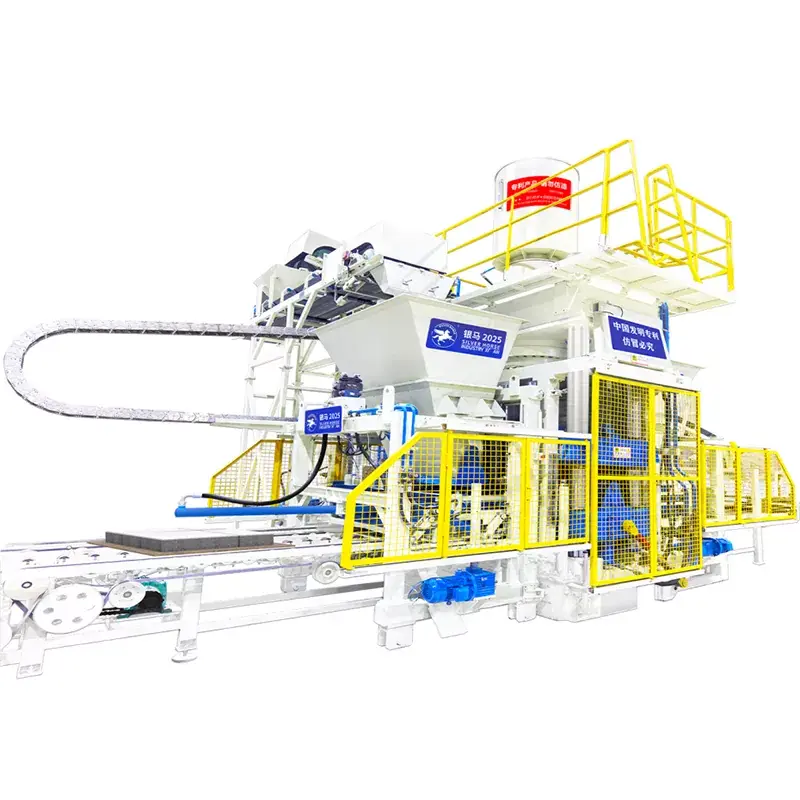
Table of Contents
- What Is an Integrated Block and Stone Production Machine?
- How Does the Production Technology Work?
- What Production Performance Can Manufacturers Expect?
- What Systems Are Included in the Production Line?
- What Products Can the Machine Manufacture?
- What Are the Main Advantages for Manufacturers?
- How Should Manufacturers Evaluate an Integrated Production Machine?
- Frequently Asked Questions
What Is an Integrated Block and Stone Production Machine?
An integrated block and stone production machine is designed to manufacture different types of molded concrete and artificial stone products using one coordinated production platform. Instead of investing in completely independent machinery for conventional blocks, paving products, and artificial stone, manufacturers can use a flexible system with interchangeable molds.
The Silver Horse 2025 model integrates several forming principles, including static pressure, vibration, extrusion, and material fusion. This combination is intended to create dense and consistently formed products while allowing manufacturers to change product formats according to market requirements.
This flexibility is particularly relevant for plants serving construction, landscaping, municipal infrastructure, pavement, wall-material, and architectural-material markets.
How Does the Production Technology Work?
The forming process is one of the most important factors affecting the quality and consistency of concrete products. The Silver Horse system uses a combination of pressure and vibration rather than relying on a single forming action.
Pressure and Vibration
The equipment is specified with approximately 600 tons of static pressure. Its vibration frequency and operating range can be adjusted to match the pressure-forming process. This allows different product formulations and mold configurations to be accommodated within the production system.
Servo-Driven Operation
The production system uses servo-driven operation and a variable rotating magnetic field. Controlled drive technology can help coordinate mechanical movement and production cycles, which is important when manufacturing large quantities of standardized construction products.
Interchangeable Mold Design
One of the machine's key production benefits is mold flexibility. According to the manufacturer's specifications, one equipment set can produce different brick and stone shapes by changing molds. This makes the production platform suitable for manufacturers whose product portfolios need to evolve with customer demand.
What Production Performance Can Manufacturers Expect?
Production capacity varies according to the product dimensions, mold configuration, material formulation, and operating conditions. The published technical data provides several reference production ranges.
| Product | Product Size | Pieces per Pallet | Reference Output |
|---|---|---|---|
| Solid Brick | 240 × 115 × 53 mm | 72 | 10,000–14,000 pcs/hour |
| Paving Stone | 198 × 198 × 60 mm | 55 | 5,400–9,900 pcs/hour |
| Hollow Block | 390 × 190 × 190 mm | 12 | 1,900–2,700 pcs/hour |
| PC Artificial Stone | 300 × 150 × 60 mm | 18 | 1,900–2,200 pcs/hour |
Other published technical parameters include a pallet size of 1,350 × 1,150 mm, approximately 540 kW total production-line power, and an estimated manufacturing shop requirement of approximately 4,000–5,000 square meters. Actual plant planning should be based on the selected product range, automation level, material handling configuration, and local operating conditions.
What Systems Are Included in the Production Line?
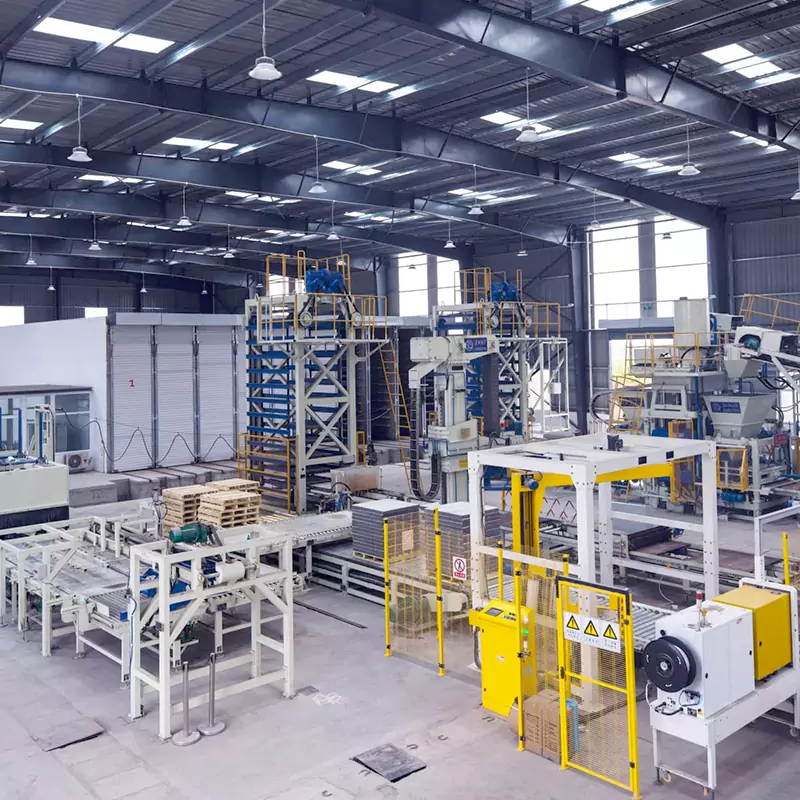
A high-capacity block and stone manufacturing plant depends on more than the main forming machine. The integrated production configuration combines material preparation, forming, conveying, curing, pallet handling, control, and packaging.
- Materials batching system: Measures and prepares the required raw materials.
- Materials mixing system: Produces consistent base and color-material mixtures.
- Main machine: Performs the principal pressure and vibration forming process.
- Pallet system: Feeds, elevates, lowers, stores, and transfers pallets through the production cycle.
- Curing system: Supports controlled curing of newly formed products.
- PLC control system: Coordinates production-line operations and automation.
- Robotic palletizing system: Supports automated product handling and stacking.
- Packaging system: Provides the final handling and packaging stage.
The production arrangement can include batching machines, cement weighing equipment, conveyors, the main forming machine, wet-block conveyors, pallet elevators, curing kilns, palletizing robots, overturning devices, pallet storage, and a PLC control room.
What Products Can the Machine Manufacture?
Product versatility is a central reason manufacturers consider an integrated platform. Different molds can be used to manufacture products for several construction and landscaping applications.
Building Wall Materials
Typical products include solid bricks, split bricks, and flower-bed bricks. These products can be used in wall construction, landscaping structures, partition applications, and related building projects.
Paving Products
The machine can support production of paving stones, pavement bricks, permeable bricks, grass bricks, and other paving formats. These products are relevant to pedestrian areas, landscape projects, driveways, public spaces, and municipal applications.
Artificial Stone Products
PC artificial stone is another production category supported by the system. Combining conventional block production with artificial stone manufacturing can allow a plant to address both structural and decorative-material markets.
Slope-Protection Products
Slope-protect bricks can be produced for applications where molded concrete products are used in erosion-control and infrastructure projects. Mold selection and product formulation should be matched to the intended installation environment.
What Are the Main Advantages for Manufacturers?
1. Broader Product Portfolio
A single production platform can support multiple product categories. Manufacturers can therefore adapt their output according to local construction demand rather than being restricted to one product format.
2. More Flexible Equipment Investment
Combining block and artificial stone capabilities can reduce the need to establish completely independent production systems for different product categories. The resulting investment structure can be particularly relevant for plants planning diversified product lines.
3. High-Volume Production Capability
Reference output for solid bricks reaches 10,000–14,000 pieces per hour, while other products have their own specified capacity ranges. This gives manufacturers a basis for evaluating potential production volume during factory planning.
4. Automated Material Handling
The production-line configuration incorporates conveying, pallet movement, curing, robotic palletizing, storage, and packaging functions. Coordinating these processes can reduce unnecessary manual handling between major production stages.
5. Established Engineering Background
Silver Horse states that it has more than 30 years of manufacturing experience and over 500 large-scale production lines installed worldwide. The company also identifies ISO 9001 certification, CE compliance, national patents, and technology awards among its engineering credentials.
How Should Manufacturers Evaluate an Integrated Production Machine?
Choosing equipment should begin with the intended products rather than machine capacity alone. A technically suitable production line needs to match raw materials, product dimensions, factory space, labor conditions, utilities, automation requirements, and expected output.
- Define the product portfolio: Identify the blocks, paving products, artificial stones, or specialty products that will be manufactured.
- Calculate required output: Compare expected daily and annual demand with the machine's reference capacity.
- Check mold requirements: Confirm that the required product dimensions and shapes can be supported through suitable molds.
- Plan factory space: Consider the main machine, batching area, mixers, conveyors, curing equipment, pallet circulation, packaging, and finished-product storage.
- Review utilities: Evaluate electrical capacity, material supply, cement handling, water requirements, and other plant infrastructure.
- Evaluate automation: Determine whether automatic conveying, palletizing, curing, and packaging are necessary for the target production volume.
- Confirm technical support: Discuss installation, commissioning, production-process guidance, operator training, maintenance, and after-sales service before placing an order.
For manufacturers comparing equipment internationally, it is also useful to review the block making production line configuration and understand how the main machine connects with upstream and downstream equipment.
Frequently Asked Questions
What products can an Integrated Block and Stone Production Machine make?
The Silver Horse 2025 system is designed for products including solid bricks, paving stones, hollow blocks, PC artificial stones, permeable bricks, pavement bricks, grass bricks, flower-bed bricks, split bricks, and slope-protection bricks. Product availability depends on the selected molds and production configuration.
Can one machine produce different brick shapes?
Yes. The manufacturer states that one equipment set can produce different brick shapes by changing molds. This allows manufacturers to adjust their product range without installing an entirely separate main forming machine for every product format.
What is the maximum listed production capacity?
For the published product examples, solid brick production is listed at 10,000–14,000 pieces per hour. Paving stones, hollow blocks, and PC artificial stones have different output ranges based on their dimensions and mold configurations.
How much factory space is required?
The published technical parameters indicate an estimated manufacturing shop area of approximately 4,000–5,000 square meters. The actual requirement should be confirmed according to the selected production-line arrangement, storage requirements, curing configuration, and site layout.
What is the total power requirement?
The published production-line specification indicates approximately 540 kW total power. The final electrical requirement should be confirmed during project engineering based on the complete equipment configuration.
Does Silver Horse provide technical support?
According to the manufacturer, its service scope includes factory setup, equipment installation, brick-making process guidance, and technical support. Project-specific service arrangements should be confirmed before purchasing.
Conclusion
An integrated production approach can give concrete-product manufacturers greater flexibility when they need to manufacture multiple product categories from one production platform. With pressure and vibration forming, interchangeable molds, automated material handling, and reference capacities covering solid bricks, paving stones, hollow blocks, and PC artificial stones, the Silver Horse system is designed for diversified industrial production. If you are planning a new block or artificial stone plant, expanding an existing production line, or evaluating a China-based equipment supplier, contact us to discuss your product specifications, production capacity, factory layout, mold requirements, and complete line configuration with Silver Horse's technical team.